
When your horse is lame, has swelling in a leg, shows signs of abdominal discomfort, or has another health concern, a physical examination can provide important information. In some cases, however, our veterinarians need a closer look at what is happening beneath the surface.
Ultrasound for horses is a non-invasive diagnostic tool that uses sound waves to create moving, real-time images of structures inside the body. It is particularly useful for examining soft tissues, but equine ultrasound has many other applications, from evaluating lameness and internal organs to reproductive care.
At Adobe Veterinary Center, ultrasound is one of the advanced diagnostic services we offer for horses as part of our equine and livestock care in Tucson.
How Does Ultrasound for Horses Work?
Ultrasound for horses uses high-frequency sound waves to create moving, real-time images of structures inside the body. During the examination, the veterinarian places an ultrasound probe against the area being evaluated. The probe sends sound waves into the body and detects the echoes that bounce back from internal tissues and structures. The ultrasound machine then converts those echoes into images that can be viewed on a screen.
Unlike X-rays, which produce still images and are particularly useful for evaluating bones, ultrasound allows our veterinarians to view soft tissues and observe some internal structures as they move and function.
Alcohol and ultrasound gel are often applied to the area being examined to help the probe make good contact with the skin and produce clear images. In some cases, a small amount of hair in that area may also need to be clipped to improve image quality.
What Can an Equine Ultrasound Show?
Ultrasound can give our veterinarians valuable information about many of the soft tissues and internal structures in a horse’s body. Depending on the area being examined, it can be used to evaluate muscles, tendons, ligaments, joints, and areas of the back and neck, as well as structures within the abdomen, chest, and reproductive system.
Because ultrasound provides moving, real-time images, our veterinarians can evaluate more than just the appearance of these structures. Ultrasound can provide information about the size, shape, location, and, in some cases, function of internal organs and other structures. It can also reveal abnormalities associated with injury, disease, or developmental problems.
How Can Ultrasound Help Evaluate Lameness in Horses?
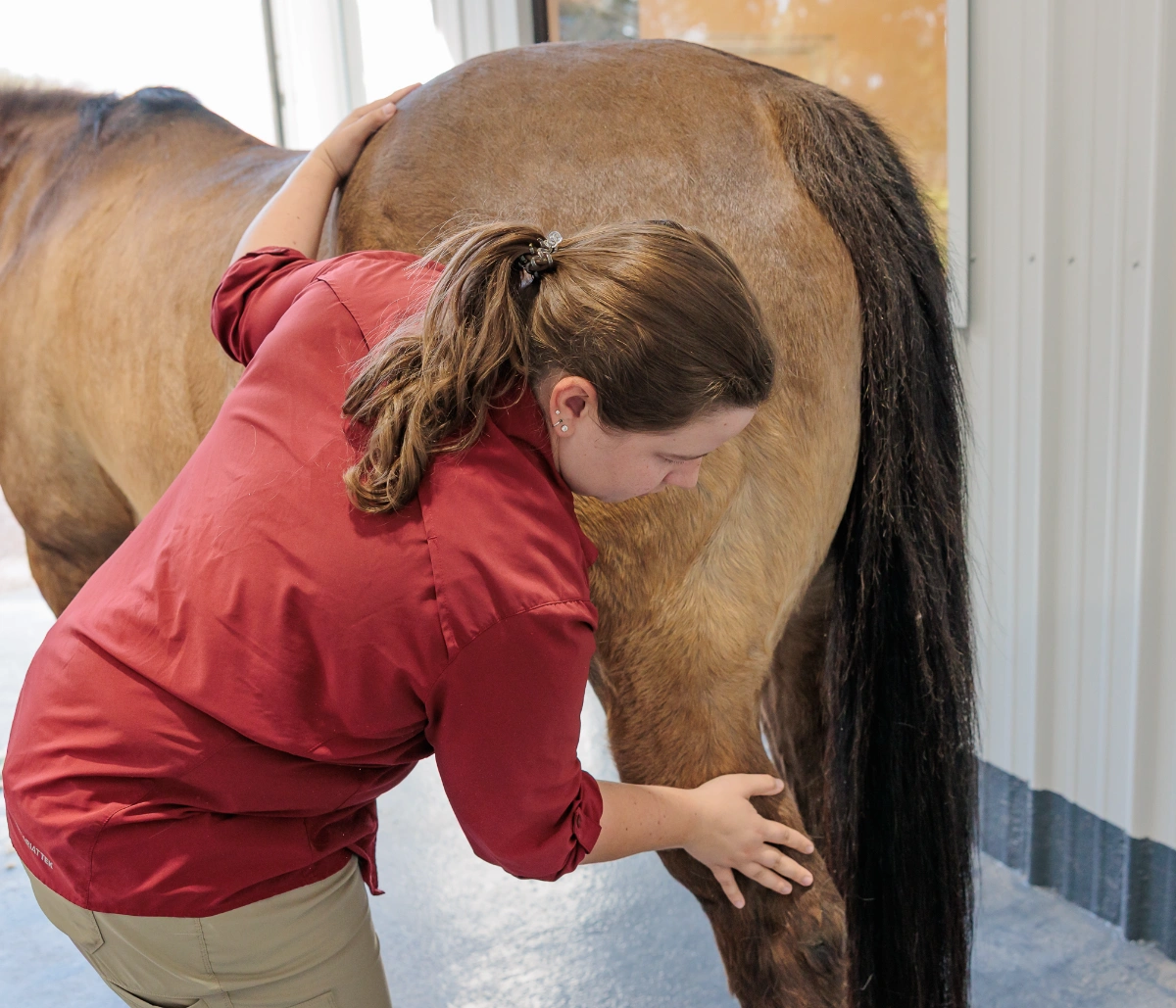
Lameness can have many possible causes, including problems involving the hooves, bones, joints, muscles, tendons, or ligaments. A lameness examination helps our veterinarians determine where the problem may be originating, and which diagnostic tests can provide more information.
Ultrasound is commonly used in horses to evaluate tendons, ligaments, and joints as part of a lameness evaluation. It can help identify changes associated with an injury and provide information about the location and extent of the problem.
The ultrasound findings, together with the lameness examination and other diagnostic information, can then help guide treatment and rehabilitation.
Monitoring a Horse’s Recovery from an Injury
Diagnosing an injury is not the only reason a veterinarian may recommend an ultrasound. Because ultrasound examinations can be repeated, they can also be useful for monitoring how an injured tendon or ligament is healing over time.
A horse may appear more comfortable before the injured tissue has regained sufficient strength. Follow-up ultrasound examinations allow the veterinarian to assess changes within the tissue and use that information when making recommendations about exercise and rehabilitation.
This can be particularly important with tendon and ligament injuries, where returning to activity too quickly can put healing tissue under excessive strain.
Abdominal Ultrasound for Horses
Ultrasound can also be useful when evaluating certain problems within a horse’s abdomen. For example, when a horse shows signs of colic, an abdominal ultrasound can allow our veterinarians to examine portions of the gastrointestinal tract and look for abnormalities that may help identify the cause of the horse’s discomfort.
Because a horse’s abdomen is large and complex, ultrasound cannot provide a complete view of every internal structure. Our veterinarians use the ultrasound findings together with the physical examination and other diagnostic information to determine the next steps in your horse’s care.
Reproductive Ultrasound for Mares
Ultrasound has long been an important tool in equine reproductive medicine. It can be used to evaluate a mare’s reproductive tract, monitor changes associated with her reproductive cycle, and assist with breeding management.
Ultrasound can also be used to detect and monitor pregnancy and assess the developing pregnancy at different stages. The timing and type of ultrasound examination depend on the mare and the reason for the reproductive evaluation.
What Should You Expect During Your Horse’s Ultrasound?
What happens during an ultrasound depends on the part of the horse being examined. The veterinarian positions the ultrasound probe over the area that needs to be evaluated and views the images produced during the examination.
One advantage of ultrasound for horses is that the examination can usually be performed while the horse is standing. Depending on the type of examination and the individual horse, medication may be given to help the horse remain calm and still while the veterinarian obtains the images.
Ultrasound does not use ionizing radiation, and the veterinarian can examine the images during the procedure. The findings can then be considered along with the physical examination and other diagnostic information to better understand what is happening.
Equine Ultrasound and Diagnostic Care in Tucson
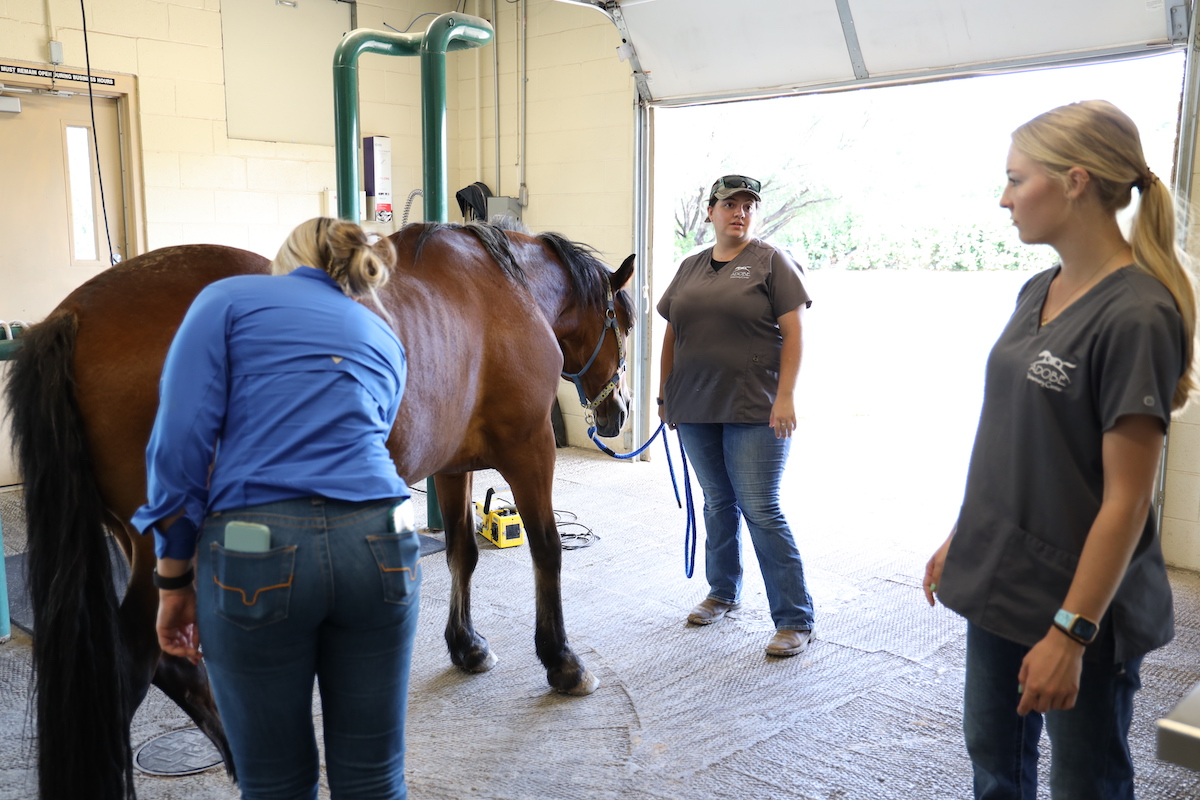
At Adobe Veterinary Center, our equine veterinarians use advanced ultrasound imaging to help evaluate a wide range of injuries and health concerns in horses. Ultrasound is also one part of our broader diagnostic capabilities, which include digital radiology, laboratory testing, and lameness evaluations.
Having access to multiple diagnostic tools allows our veterinarians to determine which approach can provide the most useful information based on your horse’s individual needs.
If you have concerns about your horse’s health or would like to learn more about ultrasound for horses and our other equine diagnostic services, contact Adobe Veterinary Center to schedule an appointment.