Laminitis, also commonly called horse founder, is a painful condition that affects the tissues supporting the bones inside a horse’s hooves. It can cause severe pain and difficulty walking. Many horses recover with appropriate treatment, particularly when the condition is recognized early. However, severe cases can cause permanent damage to the hoof, sometimes resulting in chronic pain and lameness.
At Adobe Veterinary Center in Tucson, we want horse owners to recognize the early warning signs of laminitis and founder, understand what causes these conditions, and know when veterinary care is needed.
What Is Laminitis in Horses?
Laminitis affects the laminae, the sensitive tissues that connect the hoof wall to the coffin bone inside the hoof. These tissues help support the horse’s weight and hold the coffin bone in its normal position.
When the laminae become damaged, the connection between the hoof wall and coffin bone can weaken. This causes pain and may eventually allow the bone to shift within the hoof.
Laminitis most commonly affects the front feet, although it can develop in any hoof and may involve multiple feet.
The condition can develop suddenly or progress gradually. Even when symptoms appear mild, laminitis requires immediate veterinary attention because the damage can worsen.
What Is Horse Founder?
Founder is another name for laminitis, although the term is sometimes used to describe more advanced cases in which the coffin bone rotates or sinks within the hoof.
The coffin bone is normally held in place by the laminae, the tissues connecting it to the hoof wall. When these tissues become severely damaged, the bone may shift from its normal position.
Not every horse with founder experiences this complication. Some horses recover without lasting damage, while others may develop chronic pain, changes in hoof shape, or long-term lameness.
Early veterinary treatment can help reduce the risk of serious complications.
Early Warning Signs of Laminitis and Founder
Recognizing the early signs of laminitis can make an important difference in a horse’s recovery.
Symptoms may include:
- Reluctance to walk or move: A horse may take short, cautious steps or appear uncomfortable when turning.
- Shifting weight between feet: The horse may repeatedly lift or reposition its feet to relieve discomfort.
- An unusual stance: Some horses lean backward, extending their front legs to reduce pressure on painful hooves.
- Increased hoof warmth: Affected hooves may feel warmer than usual.
- A stronger digital pulse: The pulse in the blood vessels near the hoof may become more noticeable than normal.
- Difficulty turning: Walking in a tight circle may be particularly painful.
- Spending more time lying down: A horse may lie down more frequently to avoid bearing weight on painful feet.
Not every horse displays all these symptoms. Some develop subtle changes in movement before more obvious signs appear.
If your horse shows signs of laminitis, contact Adobe Veterinary Center immediately. Do not force the horse to walk to determine how lame it is.
What Causes Laminitis in Horses?
Laminitis can develop for several reasons. Identifying the underlying cause is important because treatment must address both the affected hooves and the condition responsible for the damage.
Metabolic Disorders
Equine metabolic syndrome (EMS) and pituitary pars intermedia dysfunction (PPID), commonly called equine Cushing’s disease, are important risk factors for laminitis.
Horses with EMS have difficulty regulating insulin, a hormone that helps control blood sugar. Some horses with PPID also develop this problem. Persistently high insulin levels can trigger laminitis by disrupting the tissues that support the coffin bone inside the hoof.
Obesity and abnormal fat deposits, such as a cresty neck (excess fat along the top of the neck), can be warning signs of metabolic problems. However, horses do not have to be overweight to develop these conditions.
Excessive Intake of Sugars and Starches
Consuming large amounts of grain or other carbohydrate-rich feed can trigger laminitis under certain circumstances.
Access to lush pasture may also increase the risk in horses with insulin problems. The amount of sugar in pasture grasses varies, and horses with metabolic disorders may need carefully managed diets.
Severe Illness or Infection
Certain serious illnesses can trigger laminitis, including severe intestinal disease and infections that cause widespread inflammation or allow bacterial toxins to enter the bloodstream.
Mares that retain the placenta after foaling or develop a uterine infection may also be at risk.
Excessive Weight-Bearing on One Leg
A horse with a serious injury to one leg may place excessive weight on the opposite leg. Over time, this can damage the supporting tissues inside the hoof and cause a condition called supporting-limb laminitis.
How We Diagnose Laminitis and Founder at Adobe Veterinary Center
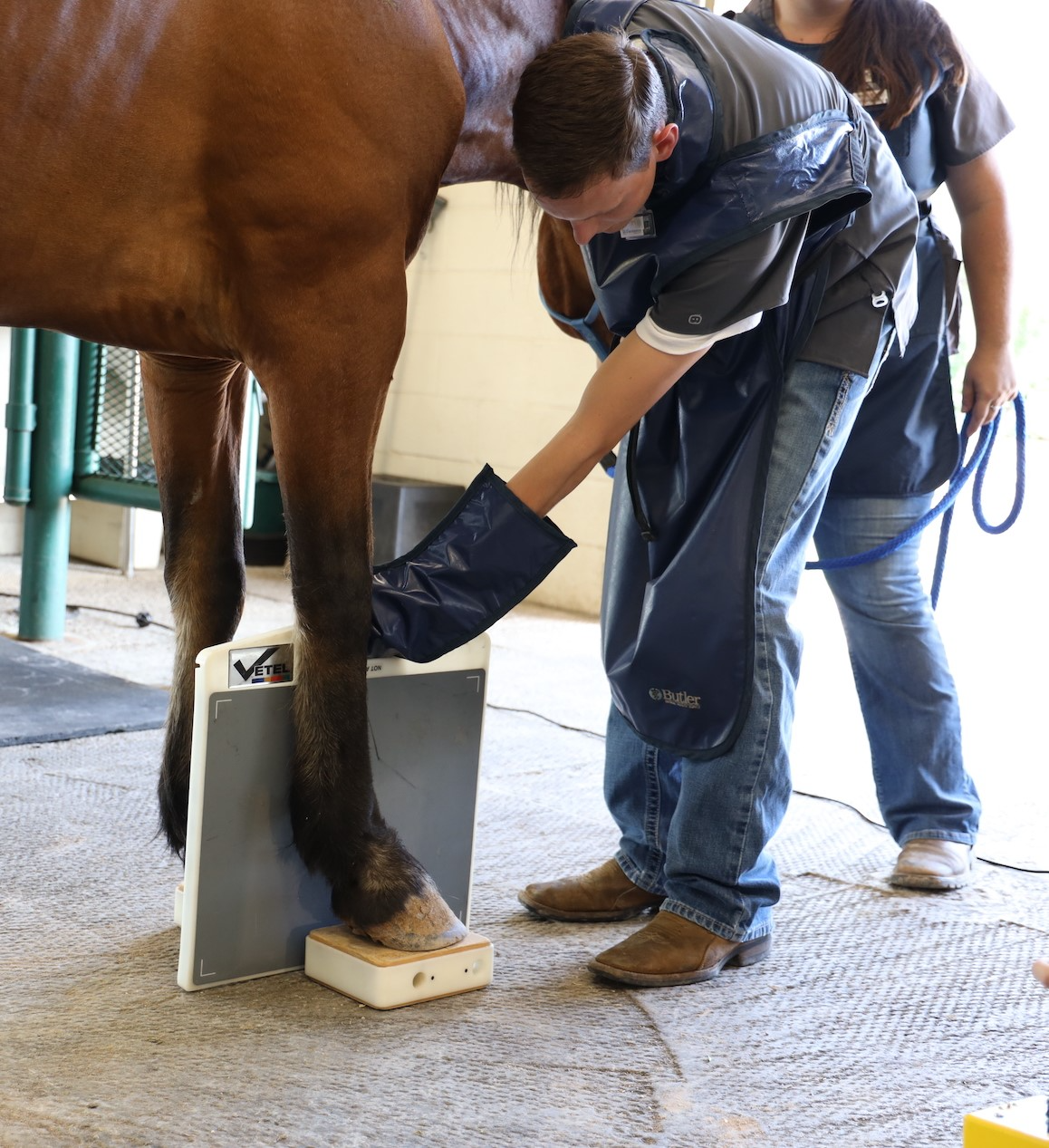
At Adobe Veterinary Center, our equine lameness examinations help us identify problems affecting a horse’s legs, joints, and hooves. When we suspect laminitis, we focus on identifying signs of hoof pain and determining whether the structures inside the hoof have been damaged.
Our veterinarians may check the hooves for abnormal warmth, increased digital pulses, and sensitivity to pressure. We also evaluate your horse’s stance, medical history, and other symptoms.
Digital radiographs (X-rays) are particularly important when evaluating suspected founder. They allow us to examine the position of the coffin bone inside the hoof and identify rotation, sinking, or other structural changes. We can use these findings to guide treatment and monitor your horse’s progress.
We may also recommend blood testing to investigate underlying metabolic disorders, including problems with insulin regulation or PPID (equine Cushing’s disease).
Treatment for Horse Founder and Laminitis
Treatment depends on the severity of the condition, whether the coffin bone has moved, and the underlying cause. Our immediate priorities are to relieve your horse’s pain, support the affected hooves, and help prevent further damage.
Immediate Veterinary Care
If you suspect laminitis, keep your horse as still and comfortable as possible while arranging veterinary care.
Avoid walking or exercising your horse. If your horse is already in a safe location, moving it unnecessarily may increase discomfort and place additional stress on the damaged tissues.
Deep, soft bedding can provide cushioning and encourage your horse to rest.
Pain Management and Hoof Support
Our veterinarians may recommend anti-inflammatory medications and specialized hoof support to reduce pain and distribute weight more comfortably.
In some acute cases, carefully controlled cooling of the feet may help limit tissue damage. Our veterinarians can determine whether this treatment is appropriate for your horse.
Specialized hoof trimming or shoeing may also be necessary. Our veterinarians can work with your farrier to develop a hoof-care plan based on your horse’s condition and X-ray findings.
Treating the Underlying Cause
If your horse has a metabolic disorder, we may recommend dietary changes, medication, and ongoing monitoring to help manage the condition and reduce the risk of additional laminitis episodes.
When laminitis develops because of severe illness or excessive weight-bearing on another leg, our veterinarians will also address the underlying cause.
Long-Term Management
Recovery varies considerably. Some horses recover without permanent structural damage, while others require prolonged treatment and specialized hoof care.
We may recommend follow-up examinations and X-rays to evaluate your horse’s progress and adjust treatment as needed.
Can Laminitis and Founder Be Prevented?
Not every case of laminitis can be prevented, but managing known risk factors can reduce the likelihood of certain forms of the disease.
Preventive measures include:
- Maintaining an appropriate body condition
- Managing pasture access and carbohydrate intake for susceptible horses
- Scheduling regular hoof care and veterinary examinations
- Testing for metabolic disorders when indicated
- Monitoring horses diagnosed with PPID or insulin dysregulation
- Seeking prompt treatment for serious illness or injuries that cause prolonged weight-bearing on another leg
Changes in feed, pasture access, and activity levels can affect your horse’s nutritional needs. At Adobe Veterinary Center, we can help evaluate your horse’s body condition and nutritional needs, particularly if metabolic problems increase the risk of laminitis.
When to Contact Adobe Veterinary Center
Laminitis is a veterinary emergency. If your horse suddenly becomes reluctant to walk, shifts weight repeatedly, adopts an unusual stance, or develops other signs of significant hoof pain, contact Adobe Veterinary Center immediately.
Our equine veterinary services include lameness examinations, diagnostic imaging, and emergency care. We can evaluate your horse’s condition, investigate possible underlying causes, and recommend an appropriate treatment and follow-up plan.
If you suspect laminitis or founder, call Adobe Veterinary Center at 520-546-8387. Our equine and livestock emergency services are available after hours.