Equine Dentistry in Tucson AZ
Equine Dentistry
Equine Dentistry
A horse’s teeth “erupt” until the age of 25-30. On their natural diet of grass, the grass wears down their teeth, and the action of reaching down to graze, and then raising the head to chew, changes the jaw position. The horse’s upper molars are spaced farther apart that the lower ones, which makes for efficient grinding of grass. Grazing horses raise their heads to chew.
However, when a horse has a diet of grain and hay (such as alfalfa), there is less fiber in their diet, and the tooth surfaces are not ground down. When these surfaces become uneven, the horse cannot move his jaw sideways, and then the teeth become even more uneven. Eventually, there are sharp points in the horse’s mouth, making chewing a painful experience


Likewise, a horse with behavior issues may have a tooth problem. It’s hard to work and be nice with razors cutting the inside of your mouth every time you eat!
- Loss of weight or general condition
- Dropping feed
- Whole grain in manure
- Tilting head while chewing
- Head tossing / resisting the bit
- Bleeding gums
- Swelling on face or jaw
- Bad odor from mouth or nose

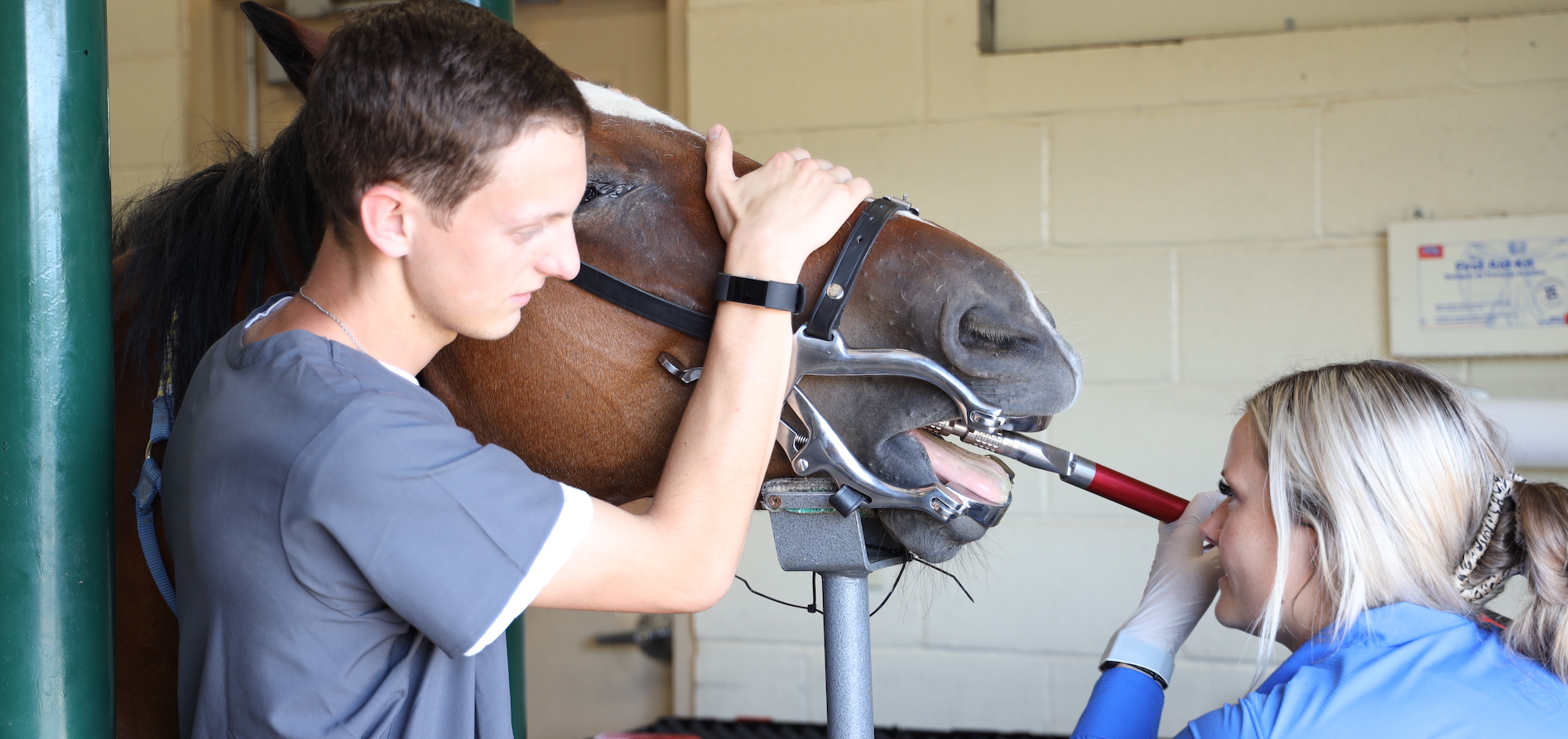
The specialized power tools, which only a veterinarian is allowed to use, make quick work of floating. They look a lot like the power tool section at a home improvement store, but the attachments (carbide blades, rotary instruments) are designed specifically for equine dentistry.
- Sharp molar edges
- Abscesses
- Bite misalignments
- Cracked molars
- Wolf teeth interference
- Deciduous teeth
- Gum inflammation / periodontal disease
Take a look at some Age Related Dental Care Needs
Help keep your horse’s mouth comfortable and free of ulcers.