
Dental care plays an important role in a horse’s comfort, performance, and long-term health. The structure of the equine mouth and the way teeth change over time make horses prone to painful dental conditions if those changes are not monitored and addressed.
Adobe Veterinary Center has an on-site facility for larger animals such as horses, and three fully equipped medical mobile units staffed by a veterinarian and a veterinary technician for comprehensive farm-call care.
Equine Teeth and How They Function
Horses have two main types of teeth: brachydont and hypsodont. The brachydont teeth include the canine teeth and the first premolars, known as wolf teeth. These teeth have short crowns, do not continue to erupt, and are not involved in grinding feed. Wolf teeth may interfere with the bit and are removed when needed. Canine teeth, more common in males, do not play a role in chewing but are assessed during routine dental exams.
The incisors and cheek teeth are hypsodont, meaning they have long crowns with much of each tooth below the gum line. As the chewing surface wears, the tooth continues to erupt into the mouth. This keeps the teeth functional for many years but also means the balance of the mouth is always changing.
Dental Changes During Growth and Early Adulthood
The equine mouth undergoes significant change during growth and early adulthood. Foals are born with large deciduous (baby) premolars and molars that occupy much of the mouth. Around 2.5 years of age, these teeth begin to shed as permanent teeth erupt. By approximately five years old, the horse has a complete set of adult teeth.
During this transition, remnants of baby teeth, called caps, may loosen unevenly or fail to shed. Caps can fracture, become trapped, or interfere with eruption of the underlying permanent tooth. This creates discomfort and uneven chewing.
Although cap removal is often straightforward, timing matters. During eruption, permanent teeth continue to develop dentin and cementum. Removing a cap too early can weaken the underlying tooth and increase the risk of fracture later in life. Regular dental evaluations during this stage help support normal development and prevent pain.
Why Dental Changes Become Painful
Equine hypsodont teeth are composed of enamel, dentin, and cementum layers. These layers wear down at different rates to create a durable grinding surface. Enamel is extremely hard but brittle and depends on the underlying dentin and cementum for support.
As the horse chews grass and hay, the softer dentin and cementum wear more quickly than enamel. Over time, this uneven wear leaves sharp enamel ridges behind.
When the teeth do not wear evenly, sharp points and hooks develop. These overgrowths cause painful ulcers on the cheeks and tongue. They can also interfere with normal chewing and increase the risk of feed packing and periodontal disease.
Because these injuries occur deep along the cheek teeth, they cannot be seen without proper equipment. Pain may be present long before outward signs become obvious.
Abnormal Wear and Periodontal Disease
Horses normally chew in a smooth, side-to-side motion. When something disrupts that motion, such as discomfort or uneven wear, extra pressure is placed on certain teeth and dental problems begin to develop.
Over time, this can lead to periodontal disease, where the gum separates from the tooth and creates spaces that trap feed. These areas become inflamed and infected and can cause pain and progressive damage to the structures that support the tooth. In more advanced cases, affected teeth may loosen or fail.
Addressing these problems requires careful evaluation and correction to restore comfort and normal function.
Why Sedation and a Full-Mouth Speculum Are Essential
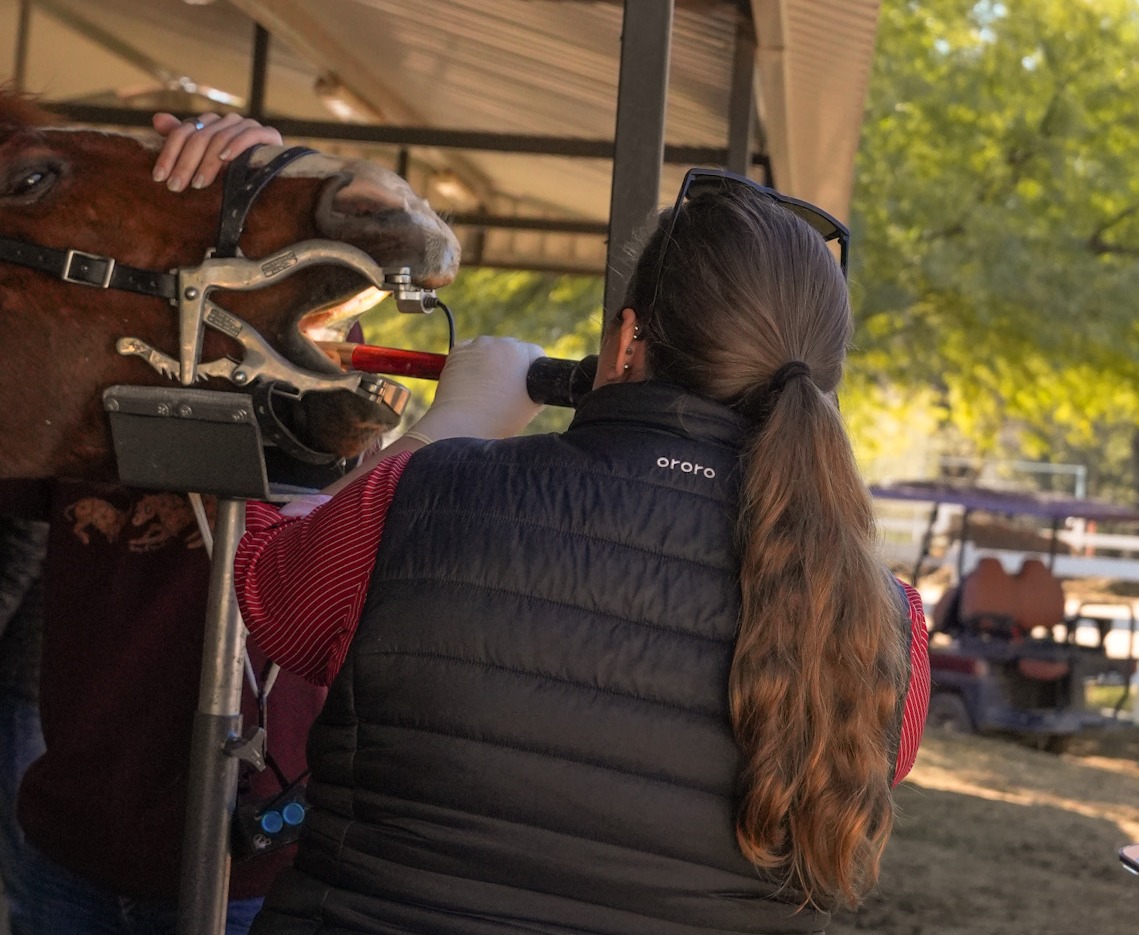
Sedation used during equine dental exams allows the horse to remain standing while reducing anxiety and excessive movement. This creates a controlled and safe environment for a thorough oral evaluation. We then place a full-mouth speculum to gently hold the mouth open. This allows clear visualization of every tooth and the surrounding tissues.
This approach protects the horse, reduces stress, and allows accurate identification and treatment of painful conditions.
What Dental Floating Does
After a complete exam, we perform dental floating to correct imbalances that contribute to pain. Floating smooths sharp enamel points, reduces hooks and overgrowth, and restores a more functional grinding surface.
The goals of floating are to:
- relieve painful pressure points
- prevent further injury to the cheeks and tongue
- improve chewing efficiency
- allow existing ulcers to heal
Proper technique is critical during dental floating. Removing too much tooth material or altering angles incorrectly can weaken the tooth and disrupt how the upper and lower teeth meet. These errors can lead to sensitivity, abnormal wear, or long-term chewing problems. For this reason, we recommend that dental floating be performed only by a licensed veterinarian and a veterinary technician, using sedation and appropriate equipment to protect both the teeth and the horse.
Signs That May Indicate Dental Pain
Dental pain may present in subtle ways. Signs that warrant evaluation include:
- Dropping feed or taking longer to chew
- Quidding, meaning wads of partially chewed hay
- Weight loss or difficulty maintaining condition
- Whole grain visible in manure
- Head tilting while chewing
- Resistance to the bit or changes under saddle
- Changes in attitude or willingness to work
- Salivation, odor, or swelling of the face or jaw
How Dental Health Affects Nutrition and Performance
Efficient chewing is essential for proper digestion. When teeth cannot grind feed effectively, fiber remains poorly processed. This reduces nutrient absorption and can contribute to weight loss or poor coat quality.
Oral pain can also affect performance. Horses may brace against the bit, resist contact, or show tension through the jaw and poll. Addressing dental pain often leads to improved comfort and consistency under saddle.
Lifelong, Preventive Dental Care
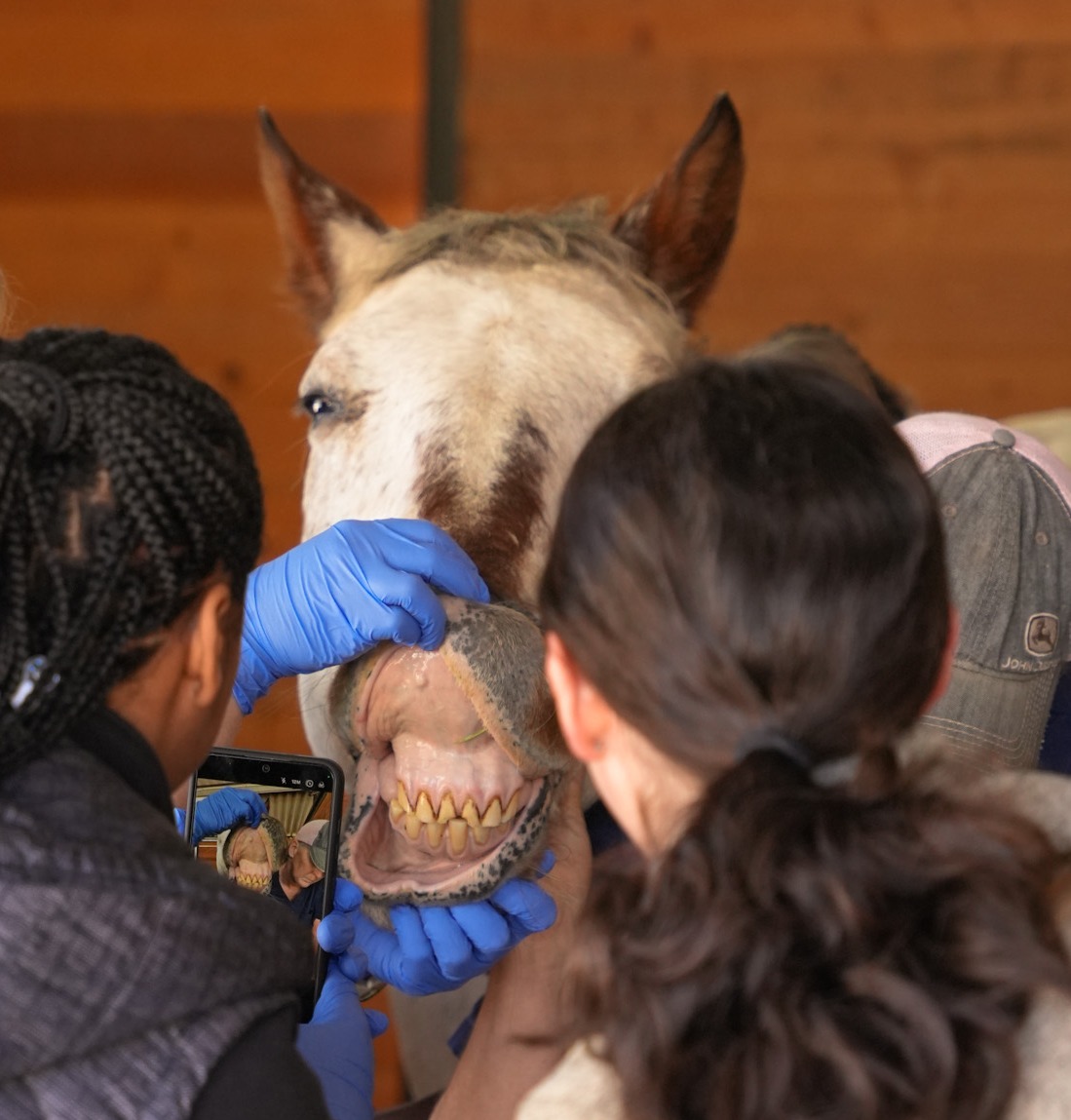
The equine mouth continues to change throughout life. Young horses need monitoring during eruption. Adult horses benefit from routine evaluations to maintain comfort and function. Senior horses face age-related dental changes that require regular attention.
If your horse is due for a dental exam, or you have noticed changes in eating, behavior, or performance, schedule an oral exam with Adobe Veterinary Center so dental problems can be identified and treated appropriately.
For additional information about equine dental care and age-related changes, visit the equine dentistry page on the Adobe Veterinary Center website.