
February is Pet Dental Health Month, and it is a good time to look closely at oral health in dogs and cats. Periodontal disease is extremely common, and many pets continue to eat and act normally even when significant disease is present. Much of the damage occurs under the gumline, where it cannot be seen without a full dental evaluation.
What We See in the Mouth
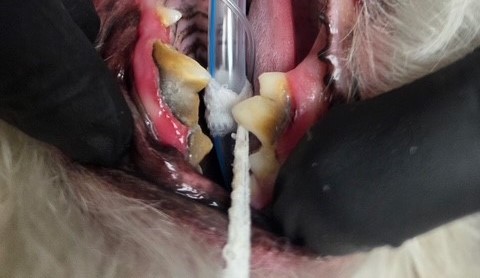
Dental disease begins when plaque forms after a pet eats. If it is not removed, plaque mineralizes into tartar. Tartar creates a surface that collects more plaque and bacteria at the gumline. These bacteria irritate the gingiva (gums) and lead to inflammation. When inflammation persists, it weakens the tissues that anchor the gums to the teeth. The gums then recede, forming periodontal pockets that harbor more bacteria and allow deeper progression of disease.
Early signs can include
• bad breath
• red or inflamed gums
• visible tartar buildup
More advanced signs may include
• loose or discolored teeth
• swelling around the jaw
• dropping food or chewing differently
Many pets show few or no outward changes, which is why disease may progress quietly.
Why Professional Dental Cleanings are Essential?
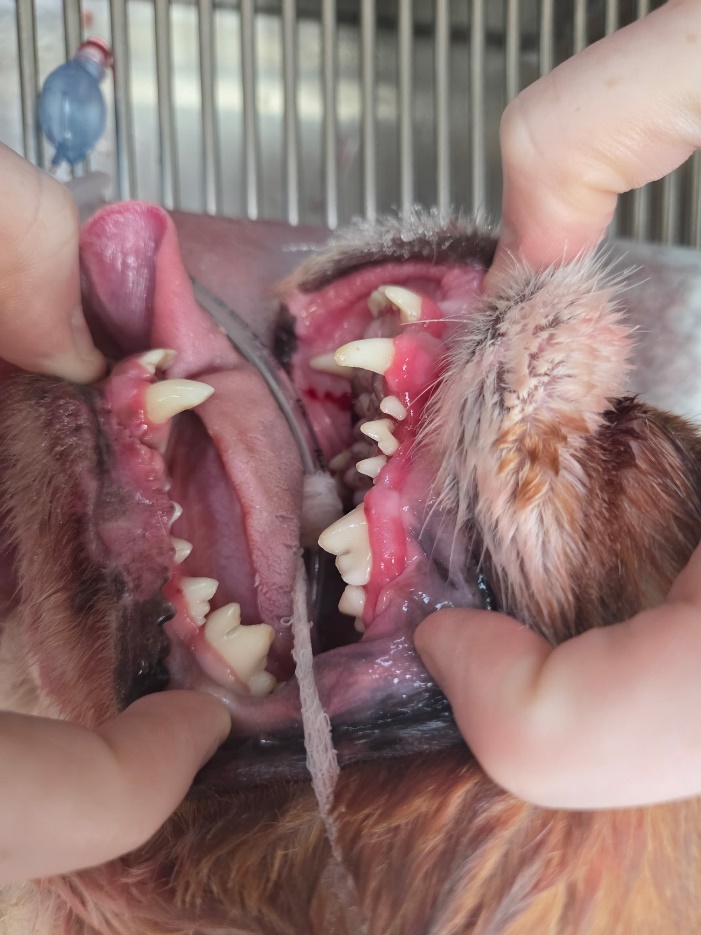
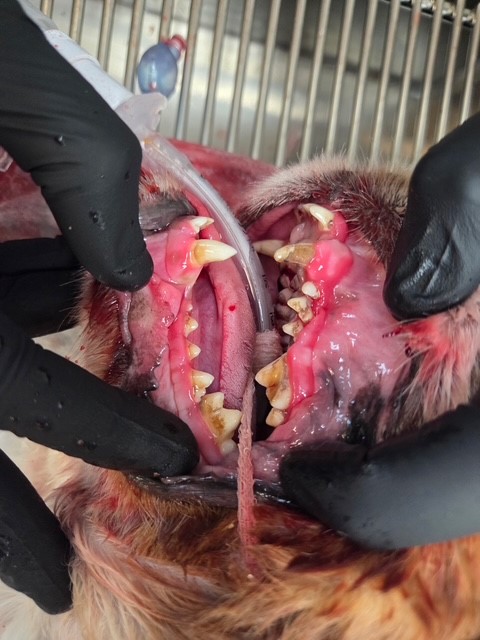
Before and after pet dental cleaning pictures.
Professional dental cleaning allows a complete evaluation of the teeth and supporting structures. Scaling removes plaque and tartar from the crown and from the area beneath the gums. Cleaning below the gums is essential because this is where periodontal disease begins.
Full-mouth dental X-rays provide information that cannot be gathered during an oral exam alone. Radiographs help identify conditions such as:
- root damage
- bone loss
- tooth resorption
Tooth resorption occurs when the body begins breaking down parts of a tooth. In cats, the process typically starts in the crown and is painful, eventually destroying the tooth and requiring extraction. In dogs, resorption usually affects the roots, is often not painful, and may not require extraction unless other problems are present.
A complete cleaning and full imaging reduce oral bacteria, slows the progression of disease, and gives us an accurate understanding of your pet’s oral health.
Why Is Anesthesia Needed?
General anesthesia is necessary to perform a thorough and safe dental procedure. It keeps the airway protected, allows proper cleaning beneath the gums, and permits accurate dental X-rays.
Procedures done without anesthesia only clean the visible surface of the teeth and cannot treat disease in the areas where it develops. For dogs and cats, anesthesia is the accepted standard of care.
What Happens During a Dental Visit
Before the procedure, we examine your pet, and bloodwork is always recommended. With our in-house laboratory, we can run these tests quickly. Bloodwork gives us a current picture of organ function, hydration, electrolytes, and overall health, which helps us choose the safest anesthesia approach.
During the dental procedure, your pet is cared for by a trained veterinary technician. The technician performs the cleaning while continuously monitoring anesthesia, including:
- Heart rhythm
- Oxygen levels
- Carbon dioxide levels during breathing
- Blood pressure
- Body temperature, with warming equipment used as needed
The technician adjusts anesthesia depth, maintains proper positioning, and works alongside the doctor to ensure the procedure goes smoothly.
Once your pet is stable under anesthesia, your pet’s veterinarian examines each tooth above and below the gumline, and full-mouth dental X-rays are taken to evaluate the roots and surrounding bone.
A complete dental cleaning includes:
• removing plaque and tartar
• scaling under the gumline
• polishing the teeth
• rinsing the mouth
• taking full-mouth dental X-rays
The dental cleaning is performed by a technician while an additional technician continuously monitors your pet while it is under anesthesia.
If X-rays show that a tooth is damaged or cannot be saved, extractions are usually performed during the same anesthetic procedure.
Your pet is then monitored closely by a technician throughout recovery until they are fully awake, stable, and comfortable. Your pet returns home the same day.
What You Can Do at Home
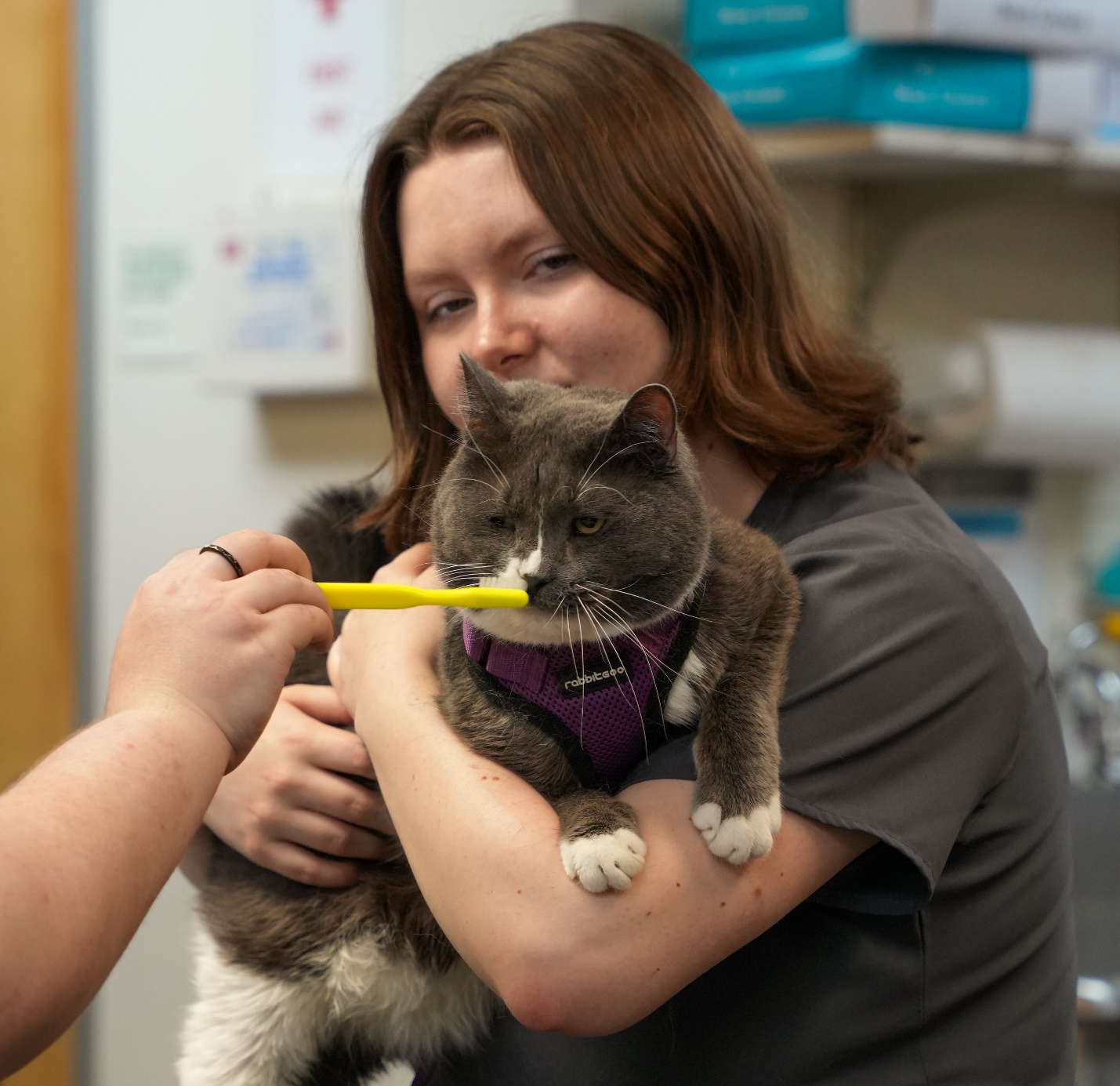
There are a few things you can do at home that make a real difference in your pet’s dental health. Here are the ones we recommend most often.
- Regular brushing is the most effective way to prevent or manage gum disease. We recommend daily brushing. Use toothpaste formulated for pets and a soft pet toothbrush. Some pets tolerate a finger brush, while others do better with a toothbrush designed for pets. You can try both to see which works best for your pet.
You can watch a short video on how to brush your pet’s teeth at home by clicking here.
- Dental diets and approved dental chews can help reduce tartar but do not replace professional cleanings.
- Avoid letting pets chew on antlers, bones, rocks, or knotted rawhides since these can fracture teeth.
- Checking your pet’s mouth from time to time may help you notice early changes such as red gums or new buildup.
Pet Dental Cleanings Matter
Periodontal disease affects both comfort and general health. Oral bacteria can enter the bloodstream and may impact the heart, liver, and kidneys. Ongoing oral inflammation affects how pets eat and how they feel day to day. Many pets show improvement after receiving appropriate professional dental care along with consistent home care.
Adobe Veterinary Center is an AAHA certified hospital and provides complete dental services for dogs and cats, including exams, cleanings, dental X-rays, and oral surgery when needed. If you have questions about your pet’s oral health or are unsure whether they may benefit from a dental evaluation, we are here to help.
.