
Living with horses in Southern Arizona means dealing with plenty of dust, dirt, and sandy soil. It also means paying attention to something that may not be obvious when you watch your horse eat: how much sand is going into the digestive tract along with that hay or feed.
Horses can accidentally ingest sand when they eat hay or grain from the ground, pick up feed that has fallen from a feeder, or graze sparse areas. Small amounts of sand may pass through normally, but sand can also accumulate in the large colon. When a significant amount accumulates, it can irritate the intestine, interfere with normal movement through the digestive tract, and potentially lead to colic.
In more serious cases, sand can contribute to an intestinal impaction or obstruction that may require hospitalization or surgery. If an obstruction cannot be resolved or the intestine becomes severely compromised, the condition can become life-threatening.
At Adobe Veterinary Center, we see horses living in the same dry, sandy conditions that are familiar to horse owners throughout the Tucson area. Understanding how sand colic in horses develops can help you reduce your horse’s exposure and recognize when it is time to call us.
How Horses Ingest Sand
Most horses are not deliberately eating large quantities of sand. Instead, they may consume small amounts repeatedly while eating.
Hay placed directly on sandy ground is an obvious source, but using a feeder does not completely eliminate the problem. Horses frequently pull hay out of feeders and eat the pieces that fall underneath. Grain and pellets that spill onto the ground can create another opportunity to pick up sand.
Horses grazing sparse areas may also ingest soil as they try to pick up short vegetation or bits of forage close to the ground.
Not every horse exposed to sandy conditions will develop a problem, but reducing the amount of sand a horse consumes is an important part of prevention.
Warning Signs of Sand Colic
Sand accumulation does not always produce an obvious warning sign before a horse develops colic. Some horses may have recurring or less dramatic digestive problems before a more significant episode occurs.
Signs can include:
- Reduced appetite
- Pawing or looking at the flank
- Repeatedly lying down or rolling
- Stretching
- Sweating
- Changes in manure production
- Diarrhea
- Weight loss
- Recurring episodes of abdominal discomfort
These signs are not unique to sand colic. Many gastrointestinal problems can cause similar symptoms, so it is important not to assume that sand is responsible simply because a horse lives in Arizona.
Can You Check Your Horse’s Manure for Sand?
You may have heard of checking manure for sand by mixing manure with water in a clear container or plastic bag and waiting to see whether sand settles to the bottom.
Finding sand in this way can indicate that your horse is ingesting it. What the test cannot reliably tell you is how much sand may have accumulated inside the intestinal tract. The amount of sand in a manure sample does not necessarily correspond to the amount retained in the horse’s colon.
If we are concerned about sand accumulation, a veterinary examination can help us decide whether further evaluation is warranted.
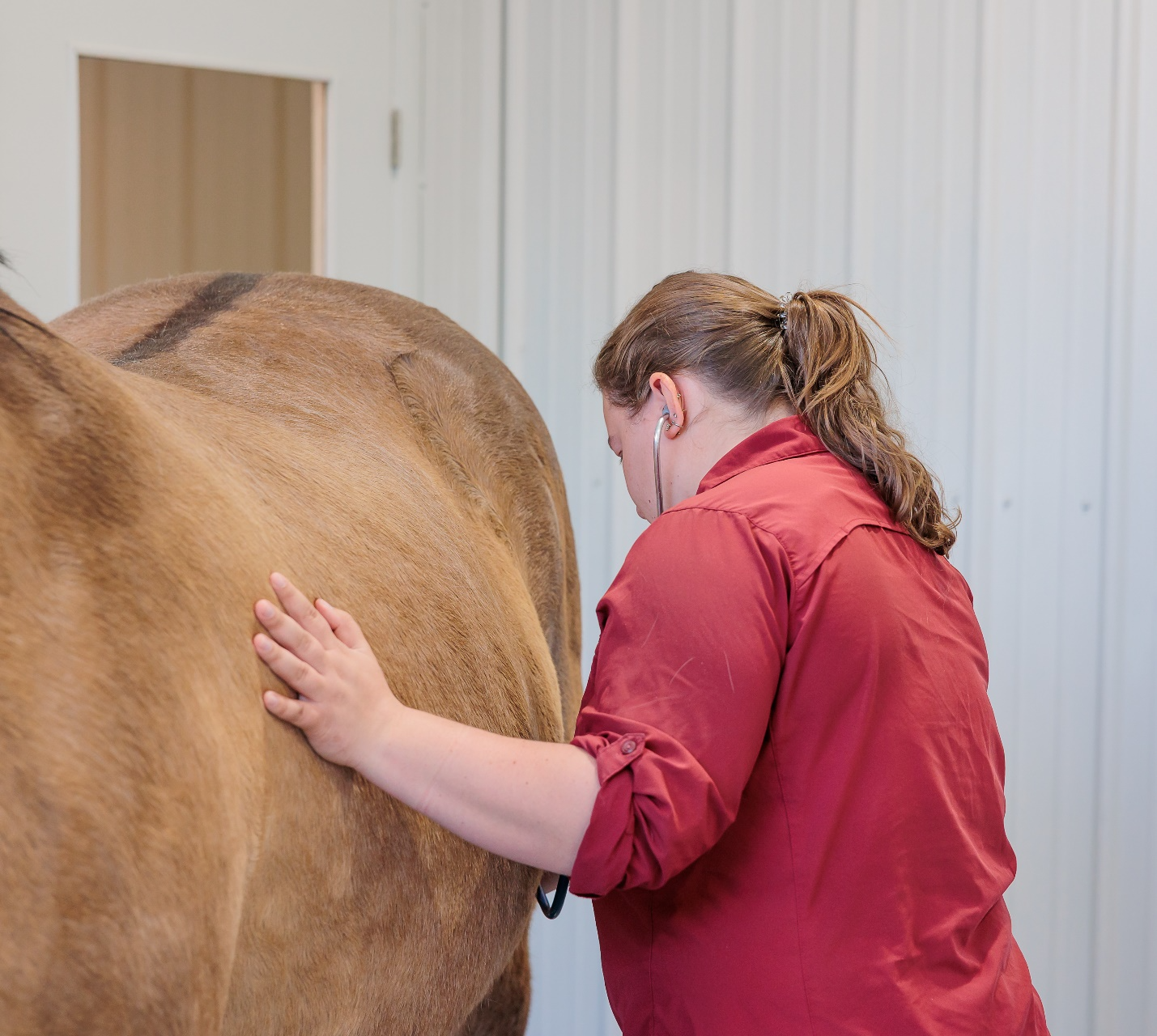
During the examination, we may listen carefully to different areas of your horse’s abdomen. In some horses, sand moving within the large colon can produce a distinctive sound. Depending on what we find during the examination, abdominal radiographs or other diagnostics may also be recommended to help determine whether a significant amount of sand has accumulated.
Reducing Sand Exposure in Arizona Horses
One of the most useful things you can do is look closely at where your horse actually eats, including what happens to hay after you put it in the feeder.
Avoid placing hay and grain directly on sandy ground. Feed tubs, hay feeders, slow feeders, or other appropriate feeding systems can reduce contact between food and the soil.
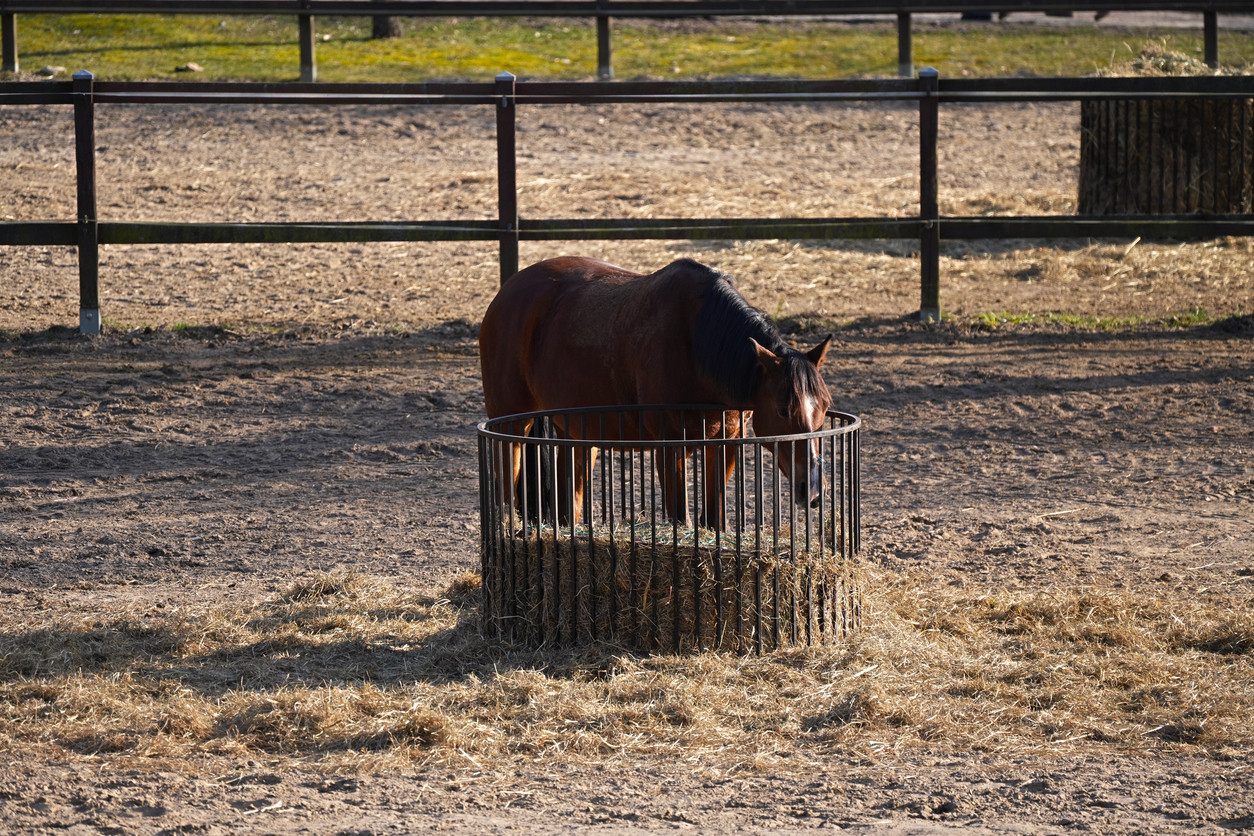
The area underneath the feeder matters, too. If your horse pulls hay out and then eats it from the ground, a feeder alone may not accomplish what you intended. Rubber mats or another clean feeding surface beneath the feeder can provide a barrier between dropped forage and sandy soil.
Keep feeding areas clean as well. Sand that collects on a mat or in the bottom of a feed tub can eventually be consumed along with the feed.
Adequate forage is also important. Horses that do not have enough forage available may spend more time picking through sandy ground for bits of hay or other food. Providing an appropriate amount of good-quality forage can help reduce this behavior while also supporting normal digestive function.
Look at sparse grazing areas as well. If your horse is trying to pick small amounts of vegetation from sandy soil, the horse may be taking in sand along with it.
Should You Give Your Horse Psyllium?
Psyllium products are familiar to many Arizona horse owners and are commonly marketed for sand management.
However, research into how effectively psyllium prevents or removes intestinal sand has produced varying results. That means there is not one supplement schedule that should automatically be recommended for every horse living on sandy soil.
Instead of relying on a supplement as the primary way to prevent sand colic, start with reducing sand exposure. Talk with our equine team about your horse’s feeding practices, environment, diet, and history. We can help determine whether additional measures are appropriate based on your horse’s individual risk.
When Colic Signs Mean It Is Time to Call Adobe Veterinary Center
You cannot determine the cause or severity of abdominal pain simply by looking at your horse. That is why it is important not to wait for dramatic symptoms before calling.
Call Adobe Veterinary Center if your horse shows signs of colic, particularly if the pain is persistent or worsening. Repeated rolling or attempts to lie down, sweating, refusing food, producing little or no manure, or significant changes in normal behavior should not be ignored.
Some intestinal problems can progress quickly, and severe sand impaction or obstruction may require intensive treatment or surgery. Prompt veterinary evaluation gives us the opportunity to determine what may be causing your horse’s pain and begin appropriate treatment.
Protecting Your Horse from Sand Colic
Sand is part of the Southern Arizona environment, but there are practical ways to reduce how much of it your horse consumes. Paying attention to where and how your horse eats, providing appropriate forage, and recognizing changes in your horse’s normal behavior can all help reduce the risk.
If you are concerned about sand colic in horses, if your horse has experienced recurring digestive problems, or you would like to discuss your horse’s individual risk, contact Adobe Veterinary Center. Our equine team can help you develop a practical sand-management plan based on your horse’s environment and feeding program.