
At Adobe Veterinary Center, a common question we hear from horse owners is: “Why do horses need shoes?” The answer depends on the individual horse.
Shoes are not automatically necessary, and going barefoot isn’t automatically better. The right approach depends on how your horse is used, the terrain it lives on, and the condition of its hooves. As an equine vet team, we help owners decide what will keep their horse comfortable and sound over time.
What Do Horseshoes Actually Do?
To understand why horses need shoes, it helps to look at what horseshoes are designed to do. Horseshoes protect and support the hoof. In the wild, horses travel long distances over varied terrain, which naturally wears their hooves down evenly. Domestic horses live differently, and their hooves do not always wear at the same rate.
Shoes can help:
- Protect hooves from excessive wear
- Provide traction on hard or uneven ground
- Support the hoof when there is imbalance or injury
- Improve comfort for horses working regularly
Here in southern Arizona, dry, rocky terrain can wear hooves down faster than they can grow. In these cases, an equine vet may recommend shoes to help prevent soreness and maintain soundness.
Do All Horses Need Shoes?
Not necessarily, and this is an important part of understanding why do horses need shoes in some situations but not others.
We see horses that do well barefoot, especially when their owners lightly ride them or the horse lives on softer ground.
Whether a horse should be barefoot or shod depends on:
- Workload and activity level
- Hoof strength and growth
- Terrain and environment
- How the horse moves (is the stride even and comfortable?)
- Leg and hoof alignment
Some horses remain comfortable without shoes, while others need additional protection as their workload or environment changes. Our equine veterinarians help evaluate these factors.
When Do We Recommend Shoes?
There are specific situations where shoes are beneficial—or necessary—and help explain why horses need shoes in practical terms.
Horses in Regular Work
Performance, ranch, and frequently ridden horses often need more protection than the hoof alone can provide.
Hard, Rocky Terrain
Arizona footing can be unforgiving. When hooves wear down too quickly or horses become sensitive, shoes provide protection.
Uneven Wear or Hoof Imbalance
If a horse wears its hooves unevenly or begins to show discomfort, corrective shoeing may be needed. We often coordinate with your farrier in these cases.
Medical Conditions
Certain conditions require additional support, including:
- Laminitis
- Hoof cracks
- Tendon or ligament injuries
In these cases, shoeing is part of a treatment plan guided by an equine vet.
When Can a Horse Go Barefoot?
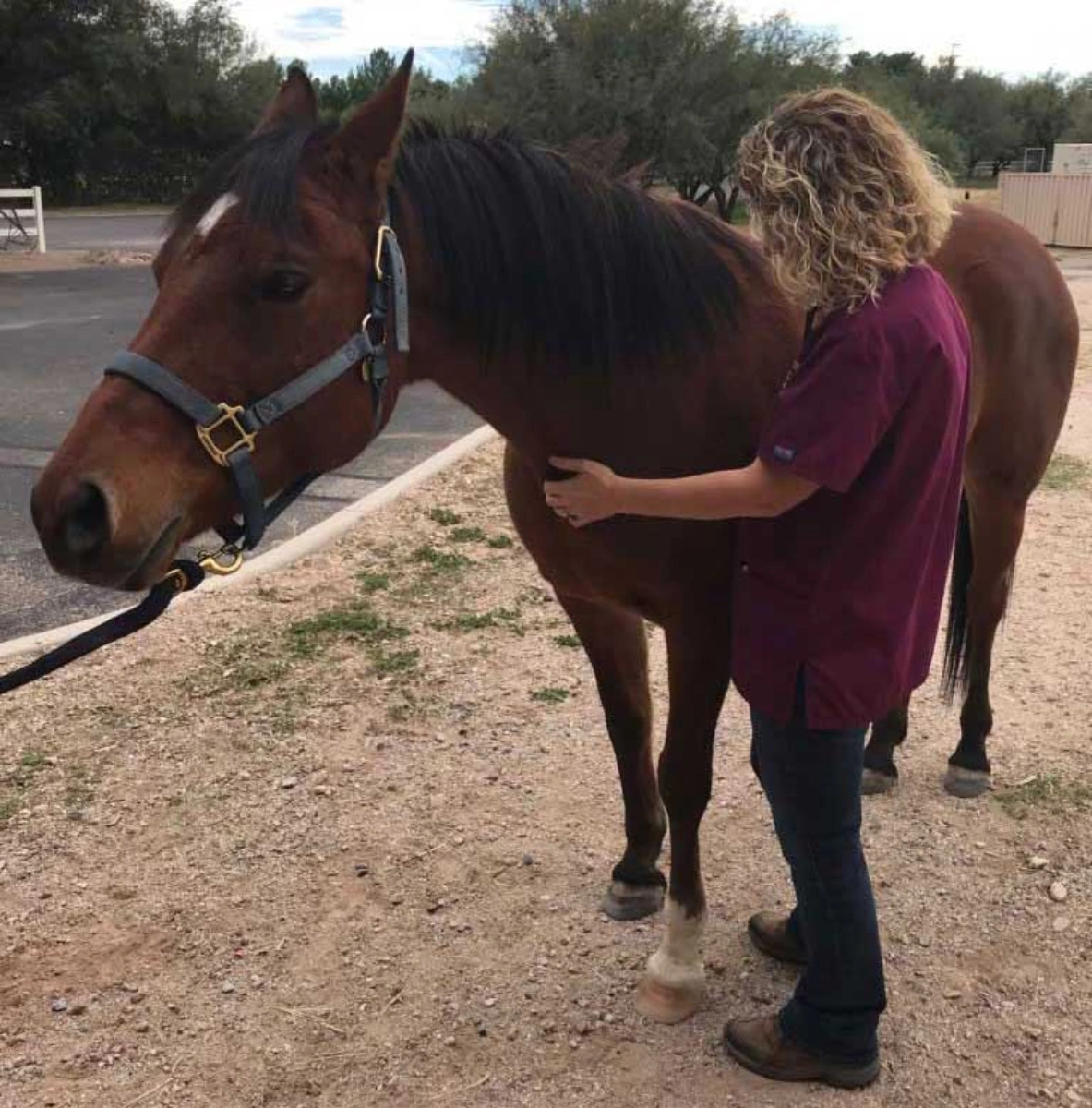
Understanding why horses need shoes also means recognizing when they may not need them.
A horse may do well barefoot if:
- Its hooves are strong and well-maintained
- It is not heavily worked
- It lives on softer terrain
- It remains comfortable on different surfaces
Benefits We See in Barefoot Horses
When appropriate, barefoot horses can benefit from more natural hoof function.
- Natural hoof movement
The hoof expands and contracts slightly with each step, helping absorb impact. - Circulation within the hoof
The hoof contains structures such as the digital cushion and a network of blood vessels. As the horse moves, the hoof compresses and expands, helping move blood within the hoof itself.
This “hoof pump” supports healthy circulation in the foot and contributes to normal blood flow returning from the hoof back up the limb. However, overall circulation depends on movement and muscle activity—not just whether a horse is barefoot or shod.
- Traction on certain surfaces
Some barefoot horses have better grip depending on footing. - Reduced mechanical risks
Without shoes, there is no risk of nail-related damage or a loose shoe.
That said, barefoot is not the right choice for every horse. If soreness, sensitivity, or excessive wear develops, protection may be needed.
Signs Your Horse May Need Shoes
Changes in movement are often the first sign that a horse may need hoof support.
Watch for:
- Shortened stride
- Sensitivity on hard ground
- Chipping or cracking hooves
- Changes in gait or comfort
Your vet will determine when corrective shoeing is appropriate to support recovery and will develop the most effective plan moving forward.
Working with Your Farrier and Equine Vet
Hoof care is a team effort. Farriers manage trimming and shoeing, while an equine vet evaluates underlying health and movement issues.
At Adobe Veterinary Center, we work closely with farriers to ensure each horse’s hoof care plan is appropriate for its needs, whether that includes shoes or a barefoot approach.
The Bottom Line
So, why do horses need shoes? In many cases, they provide protection, support, and comfort—especially for horses working on demanding terrain or with specific hoof needs.
At the same time, some horses remain comfortable barefoot under the right conditions. The best approach depends on the individual horse.
If you have questions about your horse’s hooves or movement, schedule an evaluation with the equine vet team at Adobe Veterinary Center. Early guidance can help prevent minor issues from becoming larger problems.